Achieving Precision and Accuracy: TDS Calibration Solutions Explained
0%
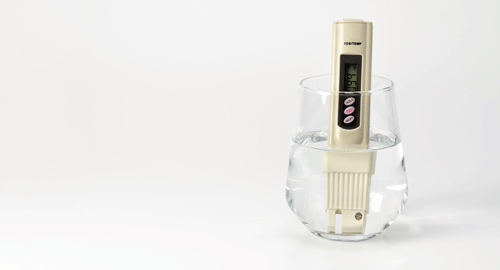
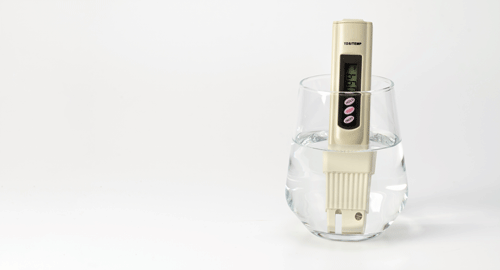
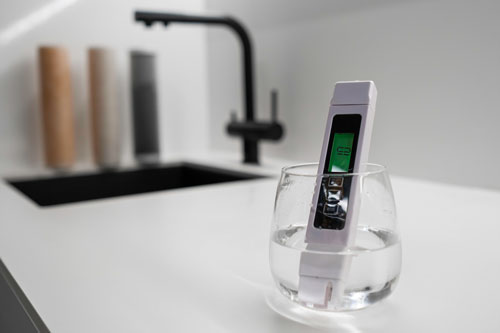
Accurate measurements are crucial in various industries, particularly when it comes to water quality analysis. Total Dissolved Solids (TDS) is an important parameter that helps determine the concentration of dissolved substances in water. To ensure precise and reliable TDS measurements, calibration solutions play a vital role. In this blog post, we will delve into TDS calibration solutions, their significance, and how they contribute to maintaining accuracy in water quality analysis.
- Understanding TDS Calibration
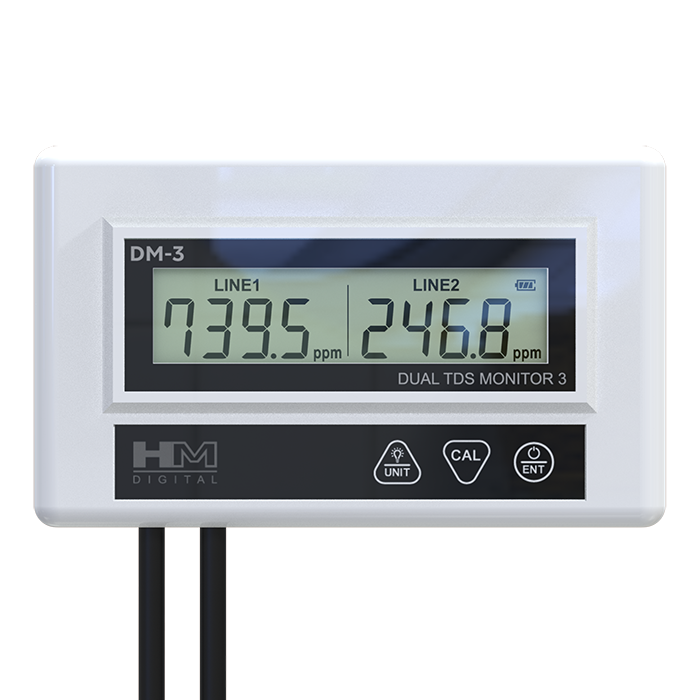
TDS calibration is the process of verifying and adjusting the measurement accuracy of TDS meters or probes. It involves the use of calibration solutions, which are specifically designed to mimic known TDS levels. By comparing the readings of the meter or probe against the known TDS values, the calibration process helps ensure the accuracy and reliability of subsequent TDS measurements.
- Importance of TDS Calibration Solutions
2.1 Ensuring Accuracy
TDS calibration solutions provide a reference point for TDS meters or probes. By using calibration solutions with known TDS concentrations, you can verify the accuracy of your measuring instrument. Regular calibration minimizes the risk of errors and ensures that your TDS measurements are precise, enabling you to make informed decisions based on reliable data.
2.2 Maintaining Consistency
Over time, TDS meters may experience drift, leading to inaccurate measurements. Calibration solutions help mitigate drift by allowing you to recalibrate the meter periodically. By establishing consistency in measurements, you can rely on the data for quality control, regulatory compliance, and other critical applications.
2.3 Confidence in Results
By calibrating TDS meters with reliable calibration solutions, you can have confidence in the accuracy of your results. This confidence is especially important in industries such as pharmaceuticals, food and beverage, hydroponics, and water treatment, where precise TDS measurements are essential for maintaining product quality, safety, and regulatory compliance.
- Types of TDS Calibration Solutions
3.1 Standard Calibration Solutions
Standard calibration solutions are designed to calibrate TDS meters across a broad range of TDS values. They typically come in various concentrations, such as 1,000 ppm or 10,000 ppm. These solutions allow for calibration at different points along the TDS scale, ensuring accurate measurements across a wide range of water samples.
3.2 Single-Point Calibration Solutions
Single-point calibration solutions are often used for specific TDS ranges. These solutions have a fixed TDS concentration and are suitable for instruments calibrated within a specific range, such as low TDS applications (e.g., drinking water) or high TDS applications (e.g., industrial wastewater). Single-point calibration solutions are convenient and cost-effective for situations where a narrow TDS range is frequently encountered.
- Best Practices for TDS Calibration
To achieve optimal results and maintain accuracy, here are some best practices for TDS calibration:
4.1 Follow Manufacturer's Instructions
Always refer to the manufacturer's instructions when calibrating your TDS meter. They provide specific guidance on the calibration process, recommended calibration solutions, and frequency of calibration.
4.2 Regular Calibration
Calibrate your TDS meter regularly, ideally at the start of each day or whenever there is a change in the measurement environment. Regular calibration ensures consistent and accurate measurements over time.
4.3 Quality Calibration Solutions
Invest in high-quality calibration solutions from reputable suppliers. Ensure that the calibration solutions are traceable to national or international standards. Using substandard or expired calibration solutions can lead to inaccurate measurements.
4.4 Proper Handling and Storage
Handle calibration solutions with care, following the manufacturer's instructions for storage conditions and shelf life. Improper handling or storage can affect the reliability and accuracy of the calibration solutions, compromising the calibration process.
Conclusion
TDS calibration solutions are essential tools for achieving accurate and reliable TDS measurements. By calibrating TDS meters or probes using reliable calibration solutions, you can maintain precision, consistency, and confidence in your water quality analysis. Following best practices for TDS calibration and using high-quality calibration solutions are key steps towards ensuring accurate TDS measurements for critical applications across various industries.