Pure Water Blog

Understanding Reverse Osmosis Equilibrium Effect and TDS Creep: A Layman's Guide

Understanding Reverse Osmosis Equilibrium Effect and TDS Creep: A Layman's Guide

Reverse osmosis (RO) is a popular water purification method that uses a semi-permeable membrane to remove impurities from water. However, it's important to be aware of two crucial concepts associated with RO systems: the Reverse Osmosis Equilibrium Effect and Total Dissolved Solids (TDS) Creep. In this blog post, we will explore these concepts in simple terms, helping you better understand how they affect the performance of your RO system.

What is Reverse Osmosis?

Reverse osmosis is a water treatment process that removes contaminants by passing water through a membrane, allowing only pure water molecules to pass while blocking impurities such as dissolved salts, chemicals, and microorganisms. It's a highly effective method for producing clean and safe drinking water.

Understanding Reverse Osmosis Equilibrium Effect:

The Reverse Osmosis Equilibrium Effect refers to a phenomenon that occurs when water molecules pass through...
Read more
Do You Need a Booster Pump for Your RO System? A Comprehensive Guide

Do You Need a Booster Pump for Your RO System? A Comprehensive Guide

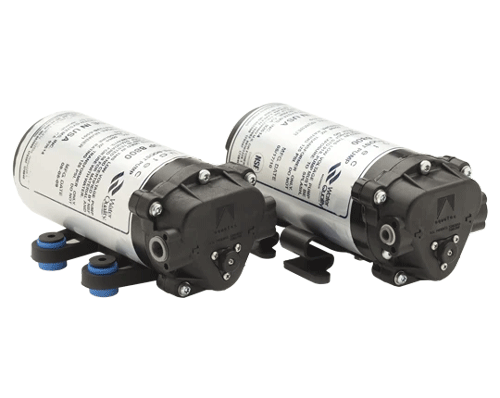
If you're considering installing a reverse osmosis (RO) system in your home or workplace, you may have come across the term "booster pump." But what exactly is a booster pump, and do you really need one for your RO system? In this article, we'll delve into the world of RO systems and explore whether a booster pump is necessary to optimize its performance. Read on to discover the benefits, considerations, and factors to help you make an informed decision.

Section 1: Understanding Reverse Osmosis (RO) Systems

To fully comprehend the role of a booster pump, it's essential to understand the basics of RO systems. Reverse osmosis is a water purification process that removes contaminants, impurities, and undesirable substances from water by utilizing a semi-permeable membrane. RO systems are known for their effectiveness in producing clean and great-tasting water.

Section 2: What is a Booster Pump?

A booster pump is an additional...

Read more
The Benefits of RO Water for Aquarium Plants: An In-Depth Analysis

The Benefits of RO Water for Aquarium Plants: An In-Depth Analysis

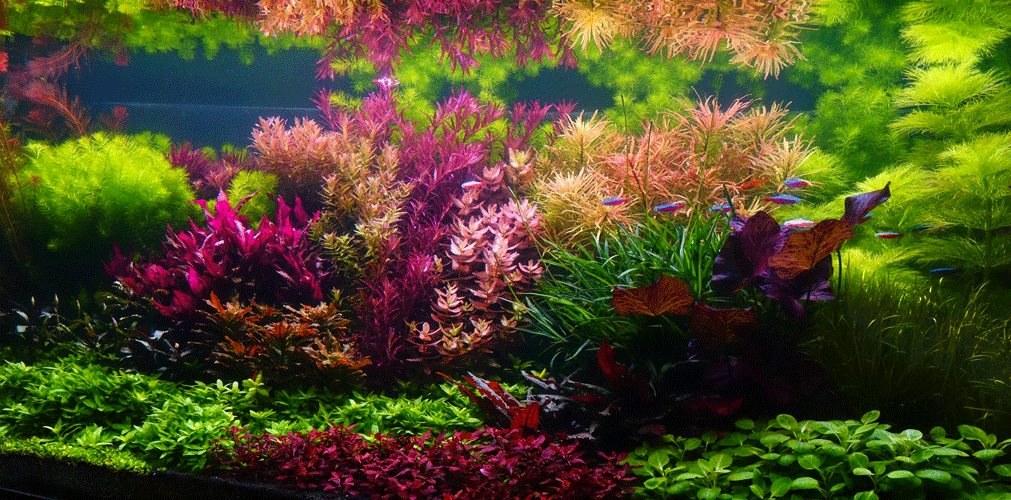
When it comes to maintaining a thriving aquarium, water quality plays a critical role, particularly for the health and growth of aquarium plants. One popular option for ensuring optimal water conditions is the use of Reverse Osmosis (RO) water. In this blog post, we will explore the advantages of using RO water for aquarium plants and how it can contribute to their overall well-being.

  1. Understanding RO Water

Reverse Osmosis is a water purification process that removes impurities and contaminants by passing water through a semi-permeable membrane. This method effectively eliminates substances like chlorine, chloramines, heavy metals, nitrates, phosphates, and other pollutants that can negatively impact the aquarium ecosystem.

  1. Optimal Water Parameters

Aquarium plants require specific water parameters to flourish, including pH levels, hardness, and mineral content. Tap water often contains high levels of dissolved minerals...

Read more
Controlling Algae Growth: The Power of RO Water Explained

Controlling Algae Growth: The Power of RO Water Explained

Algae growth is a common problem faced by many individuals, particularly those who own fish tanks, ponds, or swimming pools. Algae not only ruins the aesthetic appeal of these water bodies but also poses risks to the health of aquatic life. One potential solution that has gained popularity in recent years is the use of Reverse Osmosis (RO) water. In this blog post, we will explore how RO water can help control algae growth and provide you with valuable insights on its effectiveness.

Understanding Algae Growth: Before delving into the benefits of RO water, it's essential to understand the primary causes of algae growth. Algae thrive in environments with an excess of nutrients such as phosphates and nitrates, along with sunlight exposure. When these factors are present, algae can quickly multiply and cover surfaces, leading to unsightly green or brown water.

How Does RO Water Work? Reverse Osmosis (RO) is a water filtration process that effectively removes impurities and dissolved...

Read more
Understanding the Main Types of Sediment Filters for Water Filtration

Understanding the Main Types of Sediment Filters for Water Filtration

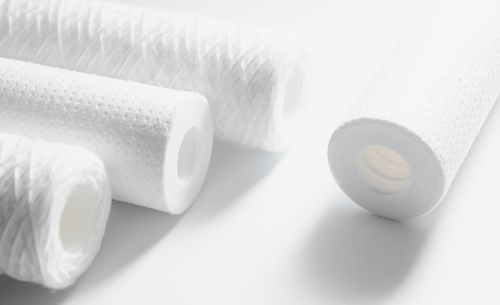
When it comes to maintaining clean and safe water for our homes or businesses, filtration is key. Sediment filters play a vital role in removing impurities and particles from our water supply. In this article, we will explore the main types of sediment filters used in water filtration systems, including wound filters, spun filters, pleated filters, and string filters. Understanding these different filter types will help you make an informed decision when choosing the right filter for your specific needs.

1. Wound Filters

Wound filters, also known as depth filters, are made from a tightly wound string around a central core. These filters are highly effective at capturing sediments, such as sand, silt, and rust. As water passes through the filter, the tightly wound string traps and removes the particles, ensuring cleaner water. Wound filters are available in various micron ratings, allowing you to choose the level of filtration required based on the water...

Read more
The Main Carbon Filter Types Used in Water Filtration: A Comprehensive Guide

The Main Carbon Filter Types Used in Water Filtration: A Comprehensive Guide

When it comes to ensuring the quality and safety of our drinking water, carbon filters play a crucial role. Carbon filters are widely used in water filtration systems due to their excellent ability to remove contaminants, chemicals, and odors, resulting in clean and great-tasting water. In this comprehensive guide, we will explore the various carbon filter types commonly employed in water filtration to help you make an informed choice for your household's needs.

1. Block Carbon Filter

Block carbon filters are solid blocks of activated carbon that efficiently remove impurities by adsorption. These filters have a larger surface area compared to granular filters, allowing them to trap more contaminants. They effectively eliminate chlorine, volatile organic compounds (VOCs), pesticides, and other common water pollutants. Block carbon filters are known for their exceptional efficiency and longevity, providing long-term, high-quality filtration.

2....

Read more
Posts loader
To Top