Pure Water Blog

Choosing the Best Water Filter: A Comprehensive Guide for Clean Drinking Water

Choosing the Best Water Filter: A Comprehensive Guide for Clean Drinking Water

In today's world, ensuring the safety and purity of our drinking water has become more critical than ever. With various contaminants and pollutants present in water sources, using a reliable water filter is essential. But with so many options available, how do you determine the best filter for your needs? In this article, we will explore the top water filters on the market and provide you with valuable insights to make an informed decision.

  1. Reverse Osmosis Filters:

Reverse osmosis (RO) filters are highly effective at removing a wide range of contaminants, including bacteria, viruses, heavy metals, pesticides, and dissolved solids. They work by pushing water through a semipermeable membrane, leaving impurities behind. RO filters provide excellent purification, but they can be expensive and require regular maintenance.

  1. Carbon Filters:

Carbon filters are popular for their ability to eliminate chlorine, sediment, bad taste...
Read more
Understanding RODI Reverse Osmosis Units: A Complete Guide

Understanding RODI Reverse Osmosis Units: A Complete Guide

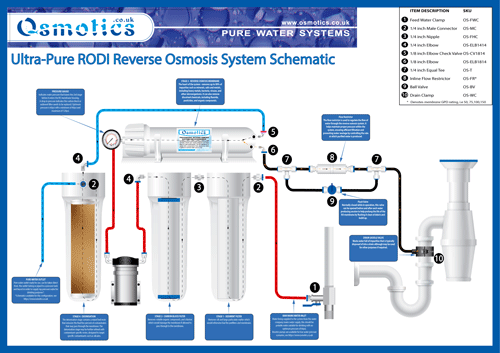
In today's era of advanced technology, ensuring the purity and safety of our water supply is of utmost importance. Reverse Osmosis (RO) has emerged as a popular method for purifying water, and RODI (Reverse Osmosis Deionization) units have gained significant attention due to their ability to produce exceptionally pure water. This blog post aims to provide a comprehensive understanding of RODI reverse osmosis units, their functionality, benefits, and applications.

Section 1: What is Reverse Osmosis?

Reverse Osmosis is a water purification process that utilizes a semi-permeable membrane to remove impurities from water. It works by applying pressure to the water, forcing it through the membrane while leaving behind contaminants such as dissolved salts, minerals, and harmful substances.

Section 2: Introducing RODI Reverse Osmosis Units

RODI reverse osmosis units are advanced water purification systems that combine reverse osmosis...

Read more
The Ultimate Guide to Cleaning Windows with RO Water: Tips and Techniques

The Ultimate Guide to Cleaning Windows with RO Water: Tips and Techniques

When it comes to achieving sparkling, streak-free windows, using the right cleaning method and tools is essential. One technique that has gained significant popularity is cleaning windows with RO (Reverse Osmosis) water. In this comprehensive guide, we will explore the benefits of using RO water for window cleaning and provide you with expert tips and techniques to achieve flawless results. Say goodbye to streaks and hello to crystal-clear windows!

Why Use RO Water for Window Cleaning?

Using RO water for window cleaning offers numerous advantages over traditional tap water or regular cleaning solutions. Here are some key benefits:

  1. Mineral-Free: RO water is purified through a filtration process that removes impurities, minerals, and contaminants. Tap water often contains minerals that can leave streaks and spots on windows, making it challenging to achieve a crystal-clear finish. By using RO water, you eliminate this issue and ensure a...

Read more
Flow Restrictors: Enhancing Efficiency and Performance of Reverse Osmosis Systems

Flow Restrictors: Enhancing Efficiency and Performance of Reverse Osmosis Systems

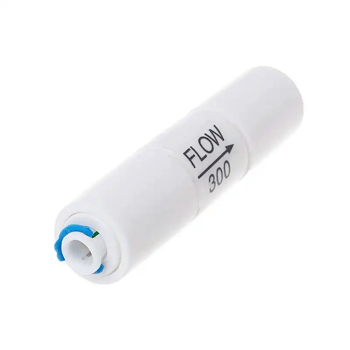
Flow restrictors are small devices that are essential components of reverse osmosis systems. Their primary function is to regulate the flow of water through the system, ensuring optimal performance and efficiency. While they may seem insignificant compared to the complex filtration mechanisms of RO systems, flow restrictors play a vital role in achieving high-quality water purification.

Why are flow restrictors necessary in reverse osmosis systems?

The answer lies in the nature of the RO process itself. Reverse osmosis works by exerting pressure on water to force it through a semi-permeable membrane, effectively separating impurities and contaminants from the clean water. This pressure is crucial for the filtration process, as it determines the rate at which water flows through the membrane.

Flow restrictors serve as control valves that regulate this pressure and maintain a constant flow rate. By limiting the flow, they create the ideal conditions for efficient filtration...

Read more
The Importance of RODI Units for Aquariums: Ensuring Pristine Water Quality

The Importance of RODI Units for Aquariums: Ensuring Pristine Water Quality

Maintaining a healthy and vibrant aquarium requires more than just beautiful fish and decorative plants. One of the key elements in ensuring the well-being of your aquatic pets is water quality. Poor water quality can lead to stress, disease, and even death among fish and other organisms in the aquarium. That's where RODI (Reverse Osmosis Deionization) units come into play. In this blog post, we will explore why RODI units are essential for aquariums and how they play a vital role in ensuring pristine water quality.

The Importance of RODI Units:

RODI units are advanced water filtration systems designed specifically for aquariums. They utilize a combination of reverse osmosis and deionization processes to remove impurities, chemicals, and contaminants from tap water. Here are some key reasons why RODI units are indispensable for maintaining a healthy aquatic environment:

  1. Eliminating Harmful Substances: Tap water often contains chlorine...

Read more
How does Reverse Osmosis work?

How does Reverse Osmosis work?

Reverse osmosis (RO) has gained immense popularity as an effective water purification method, capable of removing impurities and providing clean, safe drinking water. But have you ever wondered how reverse osmosis actually works? In this blog post, we will unravel the mystery behind reverse osmosis and delve into the fascinating science that powers this remarkable process.

Reverse osmosis is a water treatment technique that employs the principles of osmosis to purify water. Osmosis is a natural process in which solvent molecules, such as water, move from an area of lower solute concentration to an area of higher solute concentration through a semi-permeable membrane. This movement aims to equalize the concentration on both sides of the membrane.

However, reverse osmosis flips this natural process on its head. It applies external pressure to force water molecules through a specialized membrane, leaving behind a majority of impurities. The semi-permeable membrane used in reverse...

Read more
Posts loader
To Top